Yesterday I posted about Government plans to regulate incandescent light bulbs out of the market. The main basis for this desire is that such light bulbs are not energy efficient and people should be using compact fluorescent light bulbs instead.
Something else I noticed yesterday was that there was another question on light bulbs from Ed Vaizey and today I've noticed there was another the following day. What Ed asked was what percentage of light bulbs bought by different Government departments were compact fluorescents in 2005. It turns at the DTI only 27% of the light bulbs bought were ernegy efficient. Joined-up Government!
Thursday, November 02, 2006

Quote of the Day

"There have been no redundancies in my Department since 1997... Nonetheless, there have been voluntary early releases." - Parliamentary Under-Secretary, Department for Education and Skills, Parmjit Dhanda MPFor anyone remotely interested, those
Still, it only cost the taxpayer just over £60 million in Civil Service Compensation payments (that's redundancy payment to normal people), that's approximately £60K per redundancy. Them civil servants negotiate good huh?
Why were the RAF scrambled?
In a written answer to Tory MP Desmond Swayne yesterday, the Armed Force minister Adam Ingram said that the RAF had been scrambled to intercept civilian aircraft six time in the past 12 months.
On four of those occassions "the issue was safely resolved before intercept" but there were two where the civilian aircraft were "safely intercepted and escorted to a suitable destination". He went on to say that he wouldn't give further details as it "would be likely to prejudice the defence of the United Kingdom".
An intriguing answer to say the least. The implication is that on four occassions there were false alarms but on two there may have actually been genuine mid-air incidents. I guess finding outt he details is unlikely in the near future.
On four of those occassions "the issue was safely resolved before intercept" but there were two where the civilian aircraft were "safely intercepted and escorted to a suitable destination". He went on to say that he wouldn't give further details as it "would be likely to prejudice the defence of the United Kingdom".
An intriguing answer to say the least. The implication is that on four occassions there were false alarms but on two there may have actually been genuine mid-air incidents. I guess finding outt he details is unlikely in the near future.
Surveillance Society: The question we should be asking
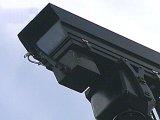 Today, as has been trailed across the news, the Information Commissioner has basically said we're living in an Orwellian reality and if we don't put the brakes on soon then the dystopia of IngSoc will have a fair more penetrating feel. OK, he wasn't quite so colourful with his description, but that was the underlying implication of his comments. Strangely though no one is asking "why?" or "how?" Britain got to where we are. If we fail to address that question then the creeping nature of surveillance will continue as rapidly as it has done thus far.
The answer, for me at least, begins within our overall attitude toward new technologies. We have, it seems, a tendency to embrace new technology far too easily without thinking about the consequences. The Government is very good at this when it comes to massive IT projects. At the same time there is a tendency for these new technologies which involve some aspect of surveillance to pitched to us in isolation.
Thus, a DNA database is pitched in isolation as a crime fighting tool. A tax credit form is pitched in isolation as a means test for benefits. CCTV is pitched as means of reducing low level crime and increasing detection. On street speaker systems coupled with CCTV are pitched as tools for affecting anti-social behaviour. The Census form changes are pitched as being about historical data collection. Speed cameras are about tackling speeding. Road user pricing is about tackling climate change not tracking vehicles. Pay as you go car insurance is about reducing premiums. Loyalty cards are about loyalty benefits. RFID tags are about stock control. Oyster cards reduce ticket queues. Cross-government data sharing is about streamlining government to make it more efficient.
Each and every one of these is pitched as a separate standalone activity and framed within terms of it's unique benefit. Never do we hear the argument of how each one interlinks to create a massively sinister reality that is only 20 years later than the date Orwell predicted. The only difference between Orwell's prediction and now is the presence of democracy, but that is only balance on the understanding of convention.
We often hear about how there will be "safeguards" with these systems. No one ever tells us what they are. We are told that Government would never use them for sinister means, "trust us" is the message. Yet at the same time polling shows that we don't trust politicians, but still we accept and embrace because at the root is the isolated pitching of each new initiative or proposal that involves them watching us. We need to start talking about new technologies in a holistic way, only then will we avoid the affronts to liberty and democracy that we are currently creating.
There is no news here
 Apparently, a new keyboard has been designed for hospitals to tackle MRSA which can be easily cleaned and alerts staff when it needs to be disinfected. That was the headline grabber on the Today Programme anyway, sadly though there is little new here.
 The picture to the right is a flexible waterproof, washable keyboard and they've been around for years. The only difference appears to be that this "new" keyboard has an automatic light to remind nurses to clean it. It's probably just me but I think there's something worrying about nurses needing to be reminded to clean something in a hospital.
It assumes there's not conscious of hygeine and, having a nurse in the family, I know full well that they are. If you train the nurses to clean the keyboards regularly they will do.
There is though something else about this reminder light. I admit I am specualting but it is highly unlikely that it is something triggered by the presence of germs. Such technology would not be financially feasible throughout the NHS, as such it's more likely to be on a timer.
Thus every so many hours the light comes on, the nurser cleans the keyboard, presses a button and the light goes off and the timer starts again. What's to stop someone (not necessarily a nurse) pressing the button and turning the light off without cleaning it?
If you must have a flexible keyboard like the one pictured then you can get one here. They're crap though.
Wednesday, November 01, 2006
How many ministers does it take to ban a lightbulb?
The simple answer to the question above is one. Ian Pearson, Minister for Climate Change and Environment at the Department of Environment, Food and Rural Affairs, said yesterday that the Government intended to ban incandescent light bulbs because they're not energy efficient.
The minister did acknowledge that the UK "cannot unilaterally ban or prevent the free trade in products such as incandescent light bulbs on the basis of their energy efficiency", but he went on to say that they could ban them with regulation which they were lobbying the European Commission to introduce.
There was also the implication of more bullying of businesses as he said the Government were "discussing with retailers and manufacturers how [to] remove inefficient lighting products from UK shelves."
They'll be banning matches and lighters next to stop us smoking.
The minister did acknowledge that the UK "cannot unilaterally ban or prevent the free trade in products such as incandescent light bulbs on the basis of their energy efficiency", but he went on to say that they could ban them with regulation which they were lobbying the European Commission to introduce.
There was also the implication of more bullying of businesses as he said the Government were "discussing with retailers and manufacturers how [to] remove inefficient lighting products from UK shelves."
They'll be banning matches and lighters next to stop us smoking.
Labour MP living in a dream world
I think the Labour MP, Andrew Dismore must be living on another planet. he's put down an EDM saying that London's buses are "modern, efficient and reliable alternative to the car" and that increased usage numebrs is because of "effective regulation, prudent and sustained investment and political support".
The reason more people in London are using buses is because there are (a) more people in London, (b) journeys in London are often interconnected between multiple transport types, and (c) cars are not a practical alternative. It's not because people think the service is efficient and reliable - it isn't.
The reason more people in London are using buses is because there are (a) more people in London, (b) journeys in London are often interconnected between multiple transport types, and (c) cars are not a practical alternative. It's not because people think the service is efficient and reliable - it isn't.
Welsh TLD?
I've just heard about a campaign called dotCYM which is campaigning for a top-level domain (TLD) for welsh language and culture sites on the Internet. They've been spurred on by the successes of a campaign by Catalans's success in getting a .cat TLD set in the Domain Name System, and now there's also been an Early Day Motion put down on the matter.
I'll be honest I'm not sure exactly what to make of this. Adding TLDs to DNS on the basis of say lanugage sets worrying precedants, what next? An Esperanto TLD? There is also the fact that .uk does actually cover Wales already. If Wales is to effectively get it's own TLD will we soon see a .eng .sco and .ni as well?
I'll be honest I'm not sure exactly what to make of this. Adding TLDs to DNS on the basis of say lanugage sets worrying precedants, what next? An Esperanto TLD? There is also the fact that .uk does actually cover Wales already. If Wales is to effectively get it's own TLD will we soon see a .eng .sco and .ni as well?
Income questions on the Census
When the last census occured theer was, if I recall correctly, discussion about plans to include questions about income. They were dropped in the end as it was felt that they were a little too intrusive. However, it appears that the prposals are back with plans to not only ask for income figures but also to ask for sources of all income. Initially the questions will be voluntary but they will become compulsory in 2011.
Call me cynical but this doesn't half sound like a means of data mining by the Treasury. If anyone has seen a Tax Credit form they ask untold questioned about your income, your saving, the interest you receive etc etc. I don't claim tax credit precisely for the reason that I think that information is none of the Treasury's business.
The new Census plans close that loophole and imply even greater inspection of the minutiae of over lives. Couple this with the reversal of assumptions in the ever-growing DNA database, tracking systems on cars, rubbish inspections et al and we might as well rename the country Airstrip One and have done with it.
Call me cynical but this doesn't half sound like a means of data mining by the Treasury. If anyone has seen a Tax Credit form they ask untold questioned about your income, your saving, the interest you receive etc etc. I don't claim tax credit precisely for the reason that I think that information is none of the Treasury's business.
The new Census plans close that loophole and imply even greater inspection of the minutiae of over lives. Couple this with the reversal of assumptions in the ever-growing DNA database, tracking systems on cars, rubbish inspections et al and we might as well rename the country Airstrip One and have done with it.
Missing Comments
Some people might notice missing comments. I rejected them due to fat fingers. Apologies.
Subscribe to:
Posts (Atom)